
- Products and Solutions
- Why Callisto?
- Join us
- News and Blogs
Cabin Safety Manager V-SafetyMind
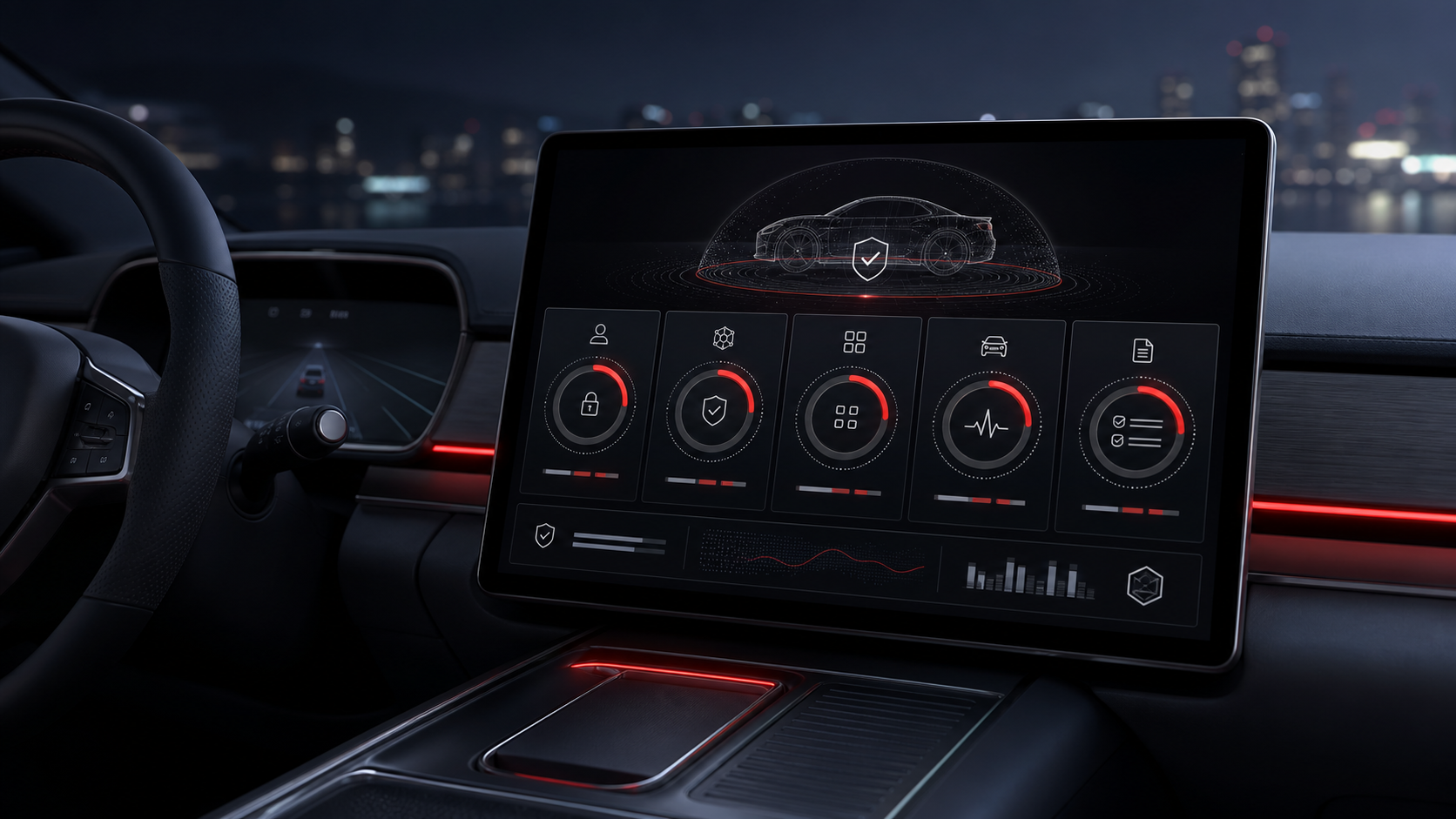
A smart cabin security system designed for LLM-powered vehicles. Covering full-domain monitoring, AI guardrails, a reassuring driving assistant, privacy protection, and guardian logs, ensuring drivers can see safety, understand risks, and control permissions on every ride.
What is Callisto V-SafetyMind?
V-SafetyMind is an edge security system designed for smart cars equipped with LLMs.
- Problem solved: Prevents cabin agent over-permission, privacy abuse, and untraceable anomalies.
- Core capabilities: Full-domain security monitoring, AI guardrails, privacy protection, driving assistant, and audit logs.
- Target audience: Automakers, smart cabin teams, connected vehicle platforms, and AI cabin app developers.
- Relation to S3 Platform: Belongs to the Shield layer, ensuring runtime security for smart endpoints and apps.
Five Core Capabilities
Comprehensive security from monitoring to interception, from in-car to off-car
1. Full-Domain Security Monitoring
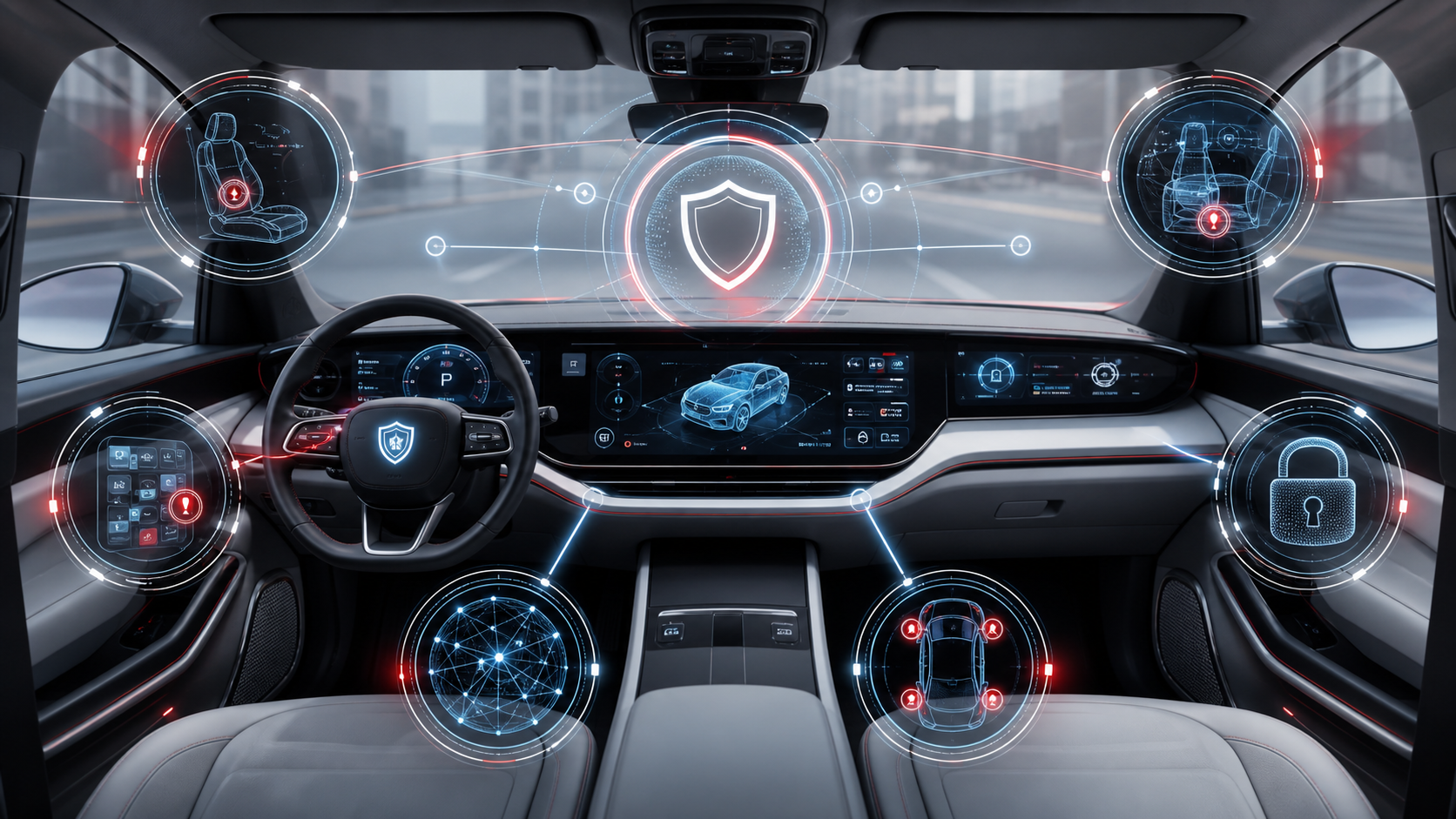
Displays the security status of driving, cabin, control, network, and privacy domains. Uses visual bubbles and alerts to let drivers instantly confirm vehicle safety.
Scenario
Detects low road adhesion in rain and suggests switching to wet driving mode.
2. Reassuring Driving Assistant
An AI security advisor based on real-time vehicle telemetry. Unlike generic AIs, it explains issues using voltage, tire pressure, DTCs, and battery health data.
Scenario
Explains battery drain by correlating 11.9V voltage, abnormal consumption, and a 12-day parking duration.

3. AI Guardrails & Skill Management
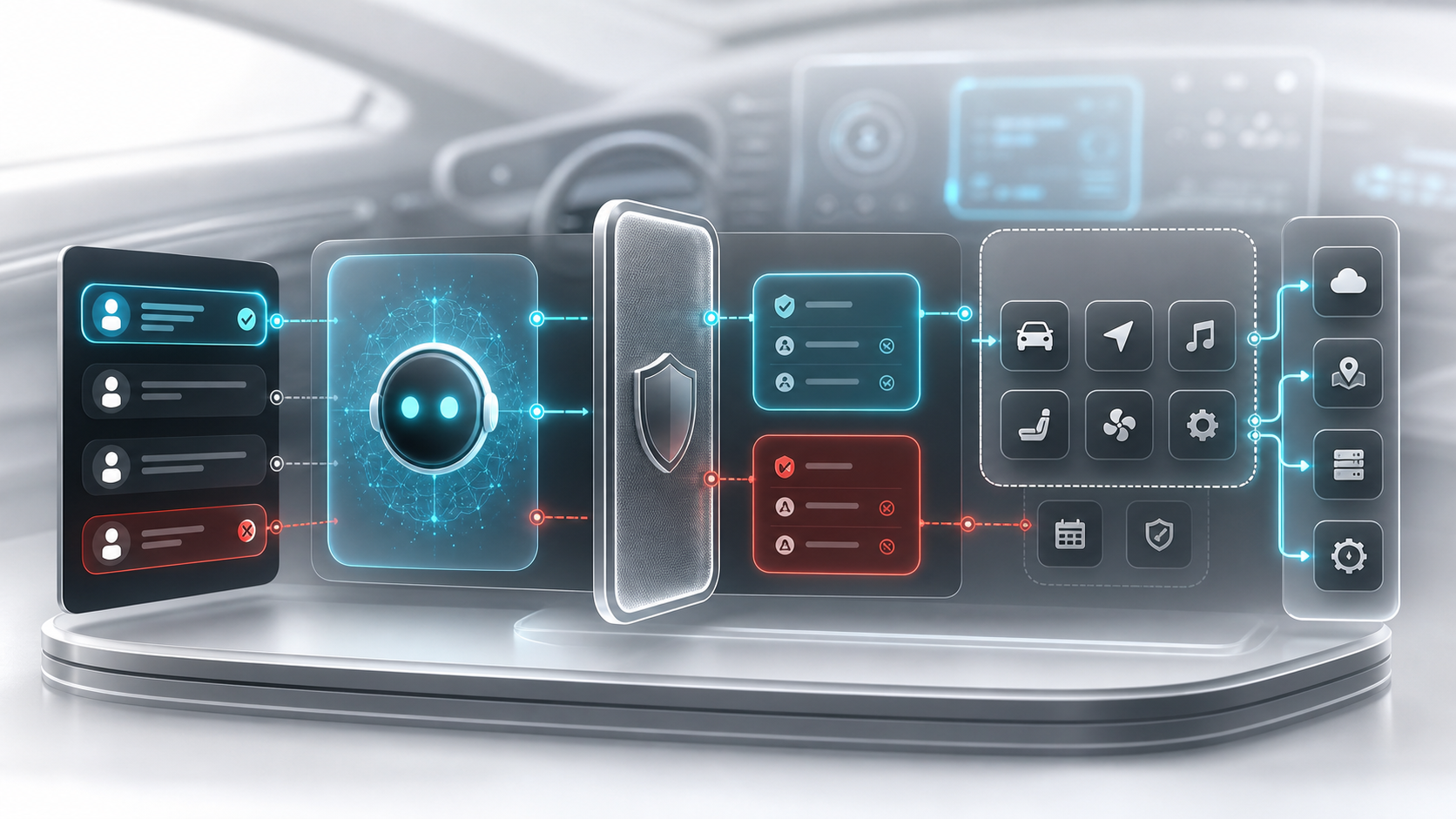
Runs independently of cabin agents to monitor decision paths, output commands, and tool calls. Covers prompt injection defense and sandbox execution.
Scenario
Intercepts jailbreak attempts via natural language to prevent external hijacking via Bluetooth or voice.
4. Privacy & Permission Protection
Centrally manages sensitive permissions (location, mic, contacts, payments) for apps and AI Skills, showing users what is requested and what to disable.
Scenario
Blocks a messaging Skill requesting continuous location; allows food ordering apps location access only during checkout.

5. Guardian Logs & Security Blackbox
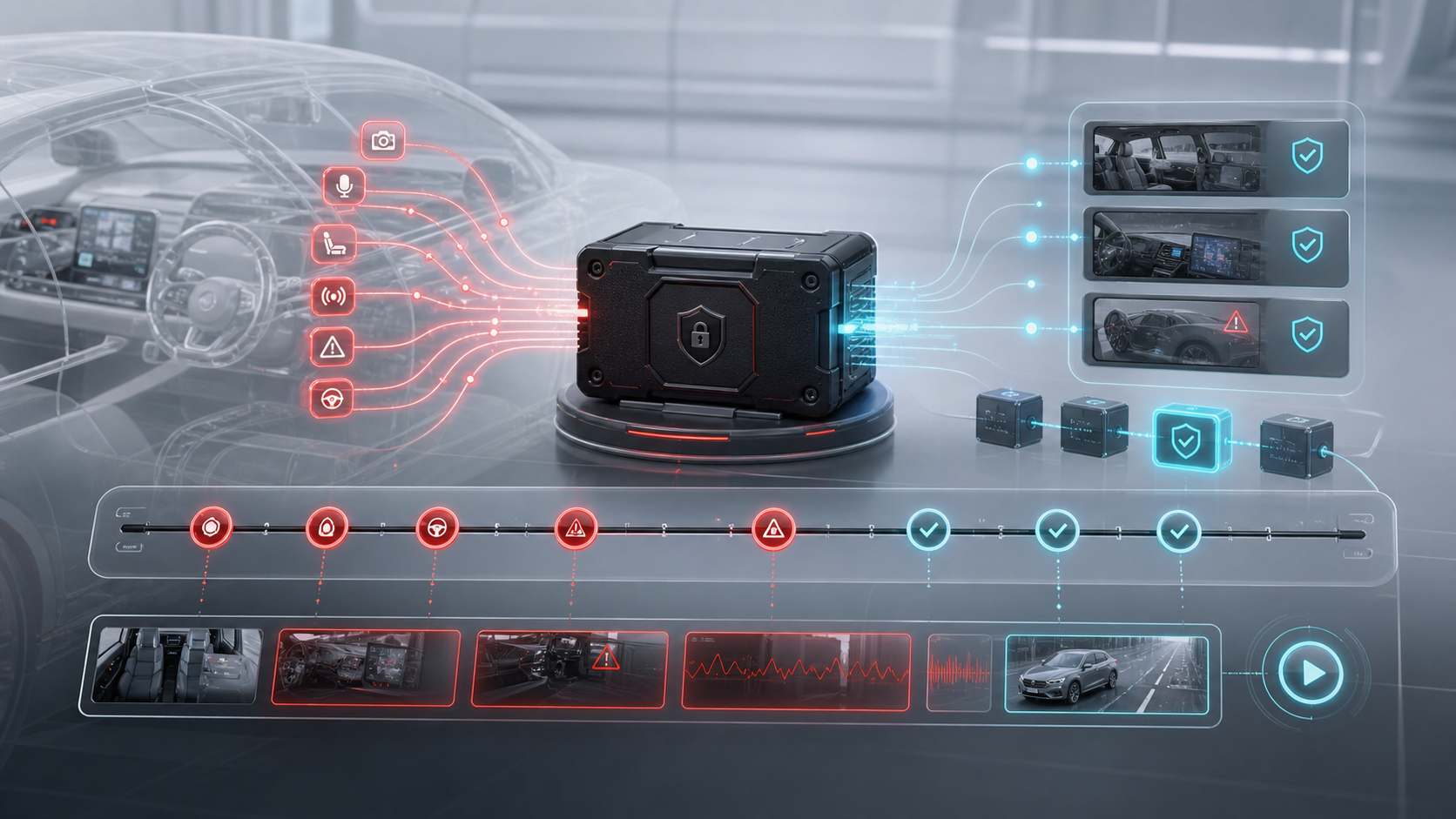
Records every security scan, interception, mode switch, and user authorization. Essential for user backtracking, after-sales service, and liability attribution.
Scenario
Helps trace the exact trigger logic when a user asks "why was the power cut off suddenly yesterday?".
Typical User Scenarios
Boarding Security Overview
Green lights across all domains upon boarding to confirm driving, privacy, and network safety.
Severe Weather Alerts
Automatic safety reminders and one-click safety modes during rain or snow.
DTC Explanations & Battery Advice
Clear, AI-driven explanations for low battery or abnormal tire pressure.
LLM Command Interception
Blocks high-risk or logically conflicting voice commands (like opening doors at high speeds).
Child Passenger Protection
Strictly limits rear-seat controls and filters inappropriate content in child mode.
Cabin App Privacy Governance
One-click scanning to revoke excessive permissions from third-party apps.
Off-Car WeChat Assistant
Receive anomaly alerts and daily driving security reports via WeChat after leaving the car.
Edge-Cloud Integrated Security Architecture
A three-layer closed loop of edge execution, off-car services, and cloud operations
In-Vehicle (Edge)
Full-Domain Monitoring
AI Guardrails
Skill Management
Privacy Protection
Guardian Logs
Off-Car Extension
WeChat Assistant
Daily Driving Reports
DTC Explanations
Pre-Trip Checklists
Cloud Capabilities
Threat Intelligence
Policy Deployment
Security Operations (VSOC)
Data Analytics
Compliance Audits
Relation to Other Callisto Products
| Product | Main Value | Relation to V-SafetyMind |
|---|---|---|
| S3-VSOC | Cloud security operations and closed-loop response | Receives interception logs and alerts from V-SafetyMind for global analysis. |
| V-Guard | LLM input/output and tool call guardrails | Acts as the core AI security engine empowering V-SafetyMind. |
| V-Shield | Endpoint-cloud malware protection | Complements cabin security with low-level file and APK virus detection. |
Frequently Asked Questions
What is Cabin Safety Manager V-SafetyMind?
V-SafetyMind is an edge security system built by Callisto for LLM-equipped smart cars. It integrates status monitoring, privacy protection, AI guardrails, and advisory services to provide drivers with comprehensive, visible peace of mind.
How is V-SafetyMind different from standard cabin security apps?
Standard apps only scan for viruses or clear memory. V-SafetyMind is a security baseline deeply integrated with the vehicle E/E architecture and cabin LLM. It reads vehicle control data, constrains AI agent behaviors, and offers explainable vehicle status advice.
Why do smart cabins with LLMs need AI guardrails?
LLMs can understand intent and call tools (Skills). Without independent guardrails, malicious users could use prompt injections to trick the LLM into executing dangerous vehicle controls, or the model might hallucinate incorrect advice.
How does V-SafetyMind prevent agents from unauthorized vehicle control?
We deploy an interception engine between the agent and vehicle APIs. High-risk commands (e.g., opening doors while driving) must pass context validation and policy checks, and if necessary, trigger a pop-up requiring secondary user confirmation.
Where does the driving assistant get its data?
Its analysis is based on real-time underlying vehicle telemetry (voltage, tire pressure, sleep consumption, etc.), not generic internet QA databases, ensuring 100% accurate and context-aware answers.
What problems does Skill Permission Management solve?
As the agent ecosystem grows, third-party Skills proliferate. Permission management prevents malicious Skills from eavesdropping in the background, uploading locations secretly, or abusing payment APIs, keeping the ecosystem clean.
What is the value of Guardian Logs?
They act as the cabin’s "security blackbox". They let drivers review interception records anytime and serve as critical evidence for compliance, customer complaints, and liability tracing between AI errors and user actions.
Does V-SafetyMind support off-car WeChat services?
Yes. Through edge-cloud connectivity, owners can view daily security reports, receive off-car anomaly alerts, and ask about vehicle health directly from a WeChat Mini Program.